Best Mailchimp Alternatives for DTC Brands in 2026
Key Takeaways
- Klaviyo is the best Mailchimp alternative for DTC brands. It’s actually cheaper than Mailchimp at every tier up to ~15,000 contacts. At 5,000 active profiles, Klaviyo costs $70/month. Mailchimp Standard costs $135. That’s 48% cheaper.
- Omnisend is the cheapest option at every tier. But Klaviyo is close in price and far ahead in features. For brands under 5,000 contacts who prioritize cost, Omnisend starts at $20/month.
- Mailchimp charges for unsubscribed contacts. Klaviyo only charges for active profiles. On a typical DTC list with 20% dead weight, Mailchimp costs 20-40% more than the sticker price.
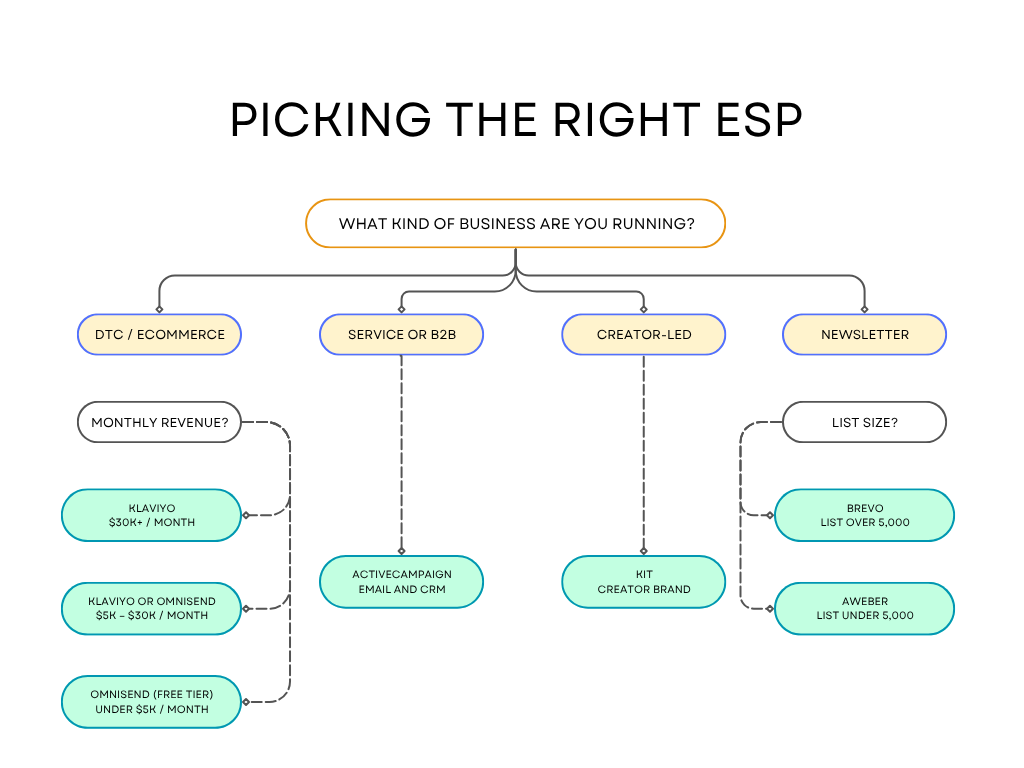
- Brevo is the cheapest viable alternative, starting at $9/month for 5,000 email sends. They charge by volume, not contacts.
- ActiveCampaign fits DTC brands with a sales team or service component but isn’t built for pure Shopify ecommerce.
- The primary technical reason DTC brands migrate is segmentation depth, not price. Mailchimp’s tag-based segmentation cannot handle ecommerce logic like “purchased X but not Y in the last 90 days.”
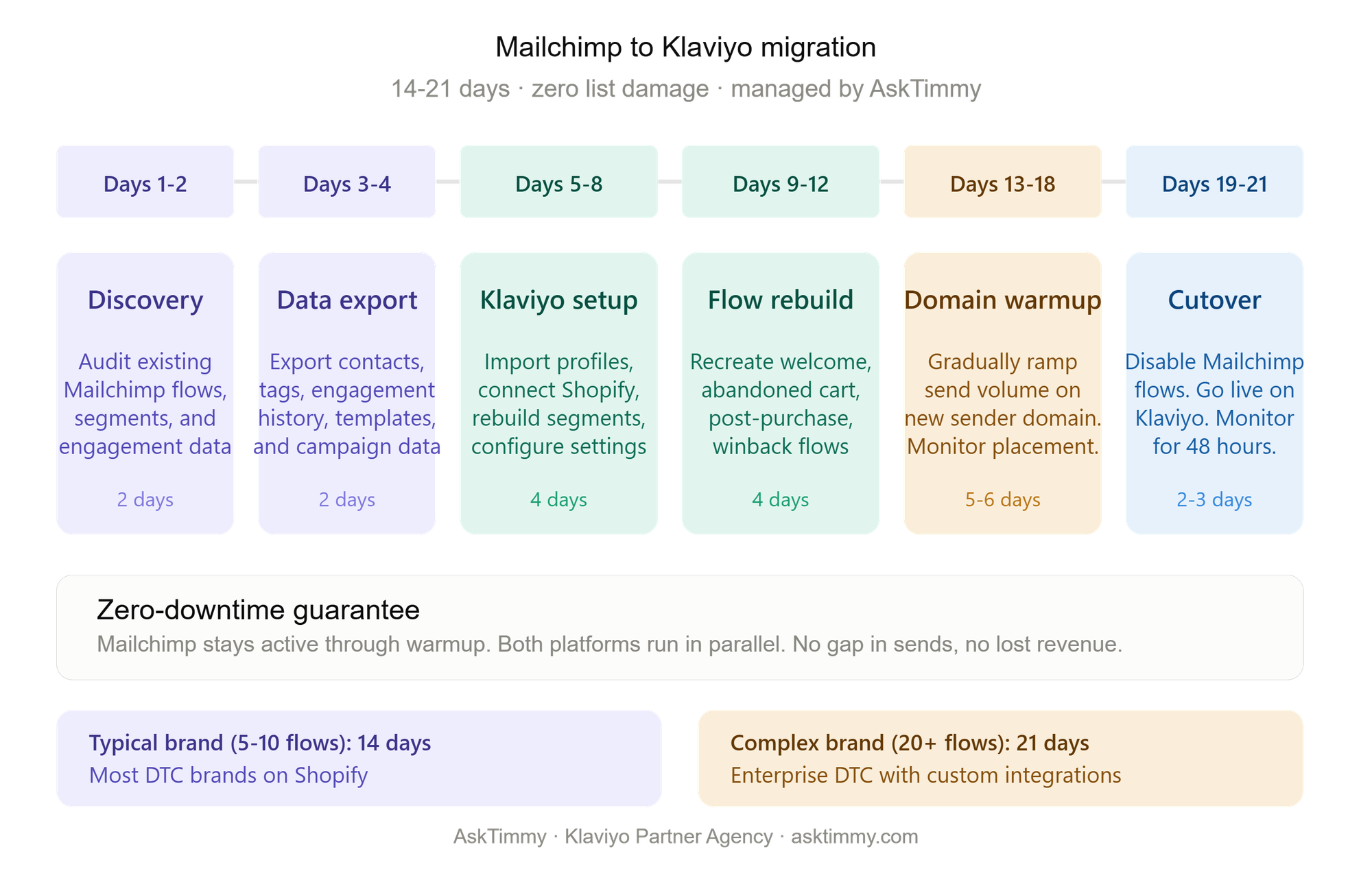
- A typical Mailchimp-to-Klaviyo migration takes 14-21 days and pays back the cost difference within 60 days for ecommerce brands.
TL;DR
For DTC brands on Shopify, Klaviyo → is the answer. It’s cheaper than Mailchimp up to ~15,000 contacts and better at every tier. Higher revenue per send, better segmentation, deeper Shopify integration. If you’re watching every dollar and don’t need Klaviyo’s advanced features yet, Omnisend gets you 80% of the capability at the lowest price on this list. If you’re not a DTC brand, scroll to the alternatives section. Each pick below is the best for its specific use case.
Need help migrating from Mailchimp to Klaviyo? We’ve done it for 25 brands. Talk to AskTimmy →
Quick Comparison Table
Pricing verified June 2026 from official pricing pages. Verify on each platform’s site before signing up.
Why DTC Brands Leave Mailchimp
Mailchimp is fine. For newsletters. For DTC, it’s the wrong tool. Here’s why our clients keep migrating:
1. You’re paying for contacts who will never buy. Mailchimp bills for every contact in your database. Unsubscribed, bounced, never-opened-an-email-in-two-years contacts. All of them count toward your plan. Klaviyo only charges for active profiles. On a typical DTC list with 20% unsubscribed contacts, you’re paying Mailchimp for a tier you don’t belong in. At 5,000 active subscribers with 1,500 dead contacts, Mailchimp bills at the 6,500-contact tier. Klaviyo bills at 5,000.
2. The segmentation is too shallow. You can’t segment based on “purchased Product A but not Product B in the last 90 days, with LTV over $200.” On Klaviyo or Omnisend, you can. Mailchimp tries to do this through tags. It doesn’t really work.
3. The Shopify integration is third-party and limited. Mailchimp lost native Shopify integration in 2019. They’ve patched it back with an app. Klaviyo, Omnisend, and Brevo all integrate directly. The data flows back faster and more reliably.
4. Deliverability gets worse as your list grows. This is the unspoken one. Mailchimp’s sender reputation is shared across millions of small senders. As your list crosses 50k contacts, your inbox placement drops noticeably. Multiple independent deliverability tests (EmailToolTester, Mailgun) consistently rank Klaviyo above Mailchimp on inbox placement. We see the same pattern across our 25 managed accounts.
The Ghost Contacts Problem
The real cost of Mailchimp isn’t on the pricing page. Mailchimp bills for every contact in your database. Unsubscribed contacts? Billed. Hard bounces you forgot to clean? Billed. That email address someone typed wrong three years ago? Billed.
Klaviyo, Omnisend, and Kit only charge for active profiles. Contacts who unsubscribe are removed from your billable count automatically.
For a DTC brand with 5,000 active subscribers and 1,500 dead contacts, Mailchimp bills at the 6,500-contact tier. Klaviyo bills at 5,000. Use our pricing calculator below to see what this means at your list size.
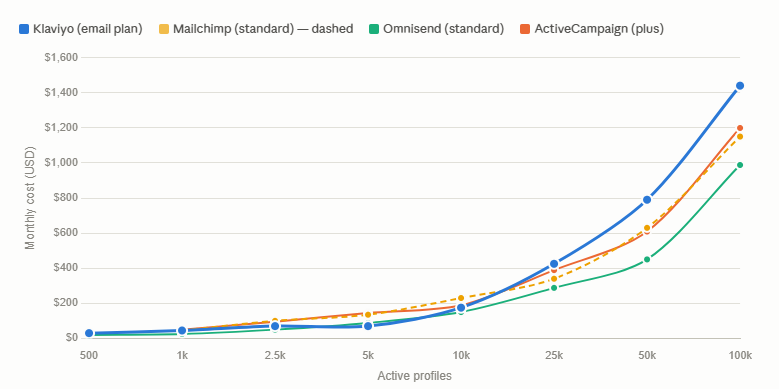
[IMAGE 5: Pricing-at-scale comparison chart — the line chart version of the calculator data showing monthly cost across 500 to 100,000 contacts for Klaviyo, Mailchimp, Omnisend, and ActiveCampaign. Mailchimp as dashed yellow baseline, Klaviyo as thick purple. Shows the crossover point at ~15k contacts. See /mnt/user-data/outputs/email-pricing-calculator.html which includes both the slider and chart.]
How We Evaluated
This isn’t a desk-research listicle. The rankings below are based on:
- 25 client account migrations we’ve personally executed since 2022
- Active management of $4M+ in annual ESP revenue across DTC brands
- Hands-on testing of every platform’s automation builder, segmentation engine, and Shopify integration
- Real deliverability data from our internal monitoring across client accounts
We’re a Klaviyo Partner, which biases us toward Klaviyo for the brands it fits. We’re not biased about the brands it doesn’t fit. AWeber, Kit, and Brevo are honestly better picks for specific situations. We say so below.
[IMAGE 12: YouTube video embed — embed your 8-minute side-by-side Mailchimp vs Klaviyo workflow comparison video. Show the abandoned cart flow being built in both platforms. Place this here, near the methodology section, where readers are deciding whether to trust you. Dwell time spike from this video adds significant ranking value.]
The 6 Best Mailchimp Alternatives, Ranked for DTC
1. Klaviyo
Best for: DTC and Shopify brands at any revenue stage. Cheaper than Mailchimp at every tier up to ~15,000 contacts. The deepest ecommerce automation and segmentation available.
Starting price: $30/month for 500 active profiles. Free up to 250 active profiles and 500 emails/month.
What it does better than Mailchimp:
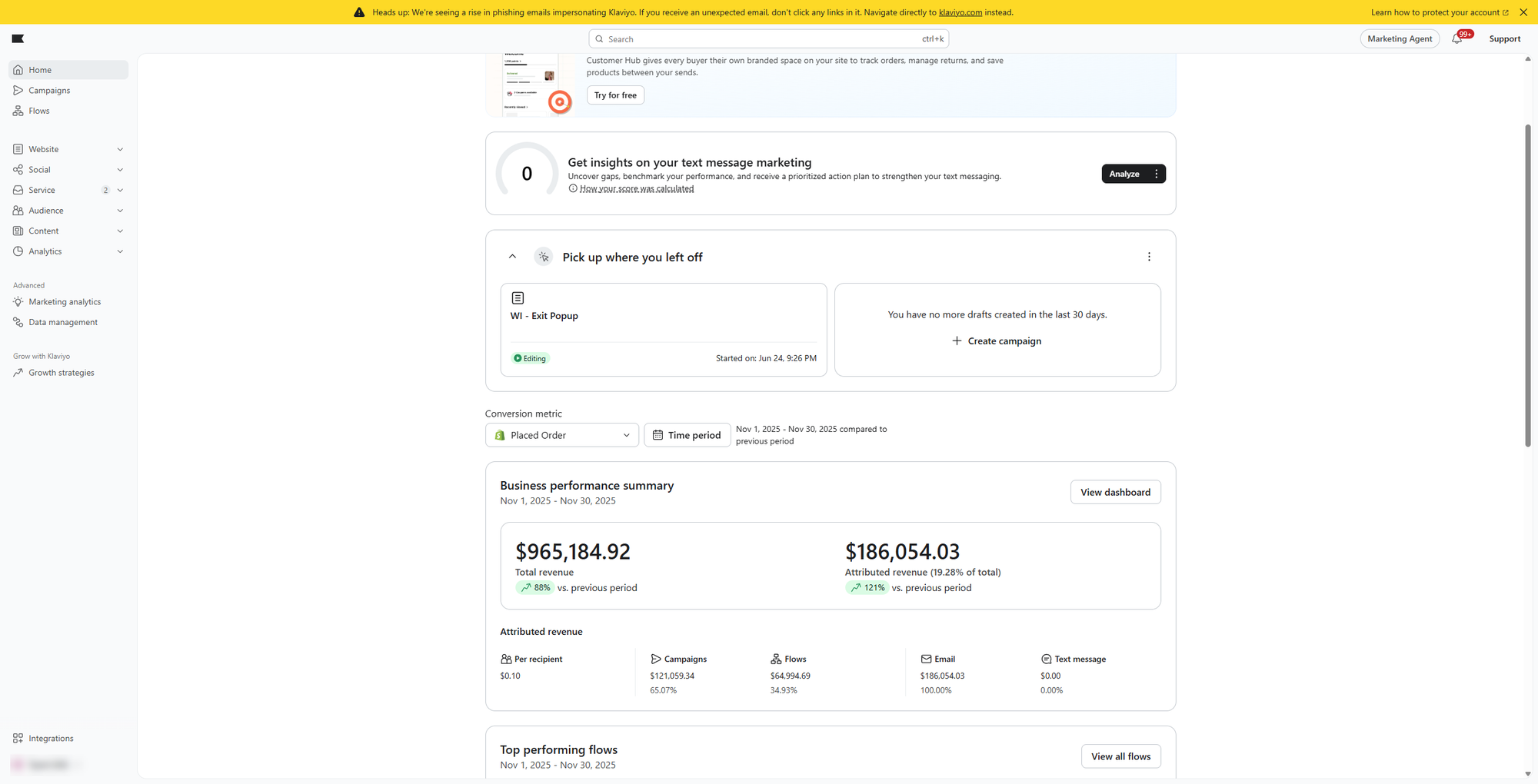
Klaviyo was built for ecommerce from day one. The Shopify integration pulls every order, abandoned cart, browse event, and product viewed into the contact profile. You can build a flow that says “send this email 2 days after someone bought a candle but didn’t come back to buy a wick” in about 90 seconds.
Segmentation is the real moat. We routinely build segments like “spent over $300 lifetime, hasn’t ordered in 60 days, lives in the US, opted into SMS.” Mailchimp can’t do this. Klaviyo does it without breaking a sweat.
The pricing is the quiet advantage. Klaviyo costs $30/month for 500 profiles, $70/month for up to 5,000, and $175/month for 10,000. That’s cheaper than Mailchimp Standard at every tier through ~15,000 contacts. Above 25,000, Klaviyo runs 20-25% more than Mailchimp on sticker price. But Klaviyo only charges for active profiles. Mailchimp charges for everyone, including unsubscribed contacts. Factor in a typical 20% dead weight list and the real-world gap shrinks to single digits.
Three honest concessions:
- Above ~15k contacts, Klaviyo costs more than Mailchimp on paper. At 50,000 profiles it’s $790/month vs Mailchimp’s $630. But Klaviyo’s active-profiles billing and the ghost contacts effect narrow this gap significantly in practice.
- The UI has a learning curve. Mailchimp can be self-taught in a weekend. Klaviyo takes two weeks of consistent use before it clicks, longer if you don’t have a Partner agency walking you through it.
- It’s overkill for non-ecommerce. If you run a SaaS, a newsletter, or a coaching business, Klaviyo is built for the wrong job. Don’t force it.
How it compares to Mailchimp: Better segmentation. Better automation. Better Shopify integration. Cheaper up to ~15k contacts. Only charges for active profiles. Worse for non-ecommerce.
Verdict: Klaviyo is the default for DTC. Cheaper than Mailchimp at the tiers where most brands live. Better at every tier. The only reason to pick something else is if you’re not doing ecommerce.
Or skip the trial pain and have us migrate your account →
2. Omnisend
Best for: DTC brands watching every dollar who want solid ecommerce features without Klaviyo’s full depth.
Starting price: $20/month for 500 contacts. Free up to 250 contacts and 500 emails/month.
What it does better than Mailchimp:
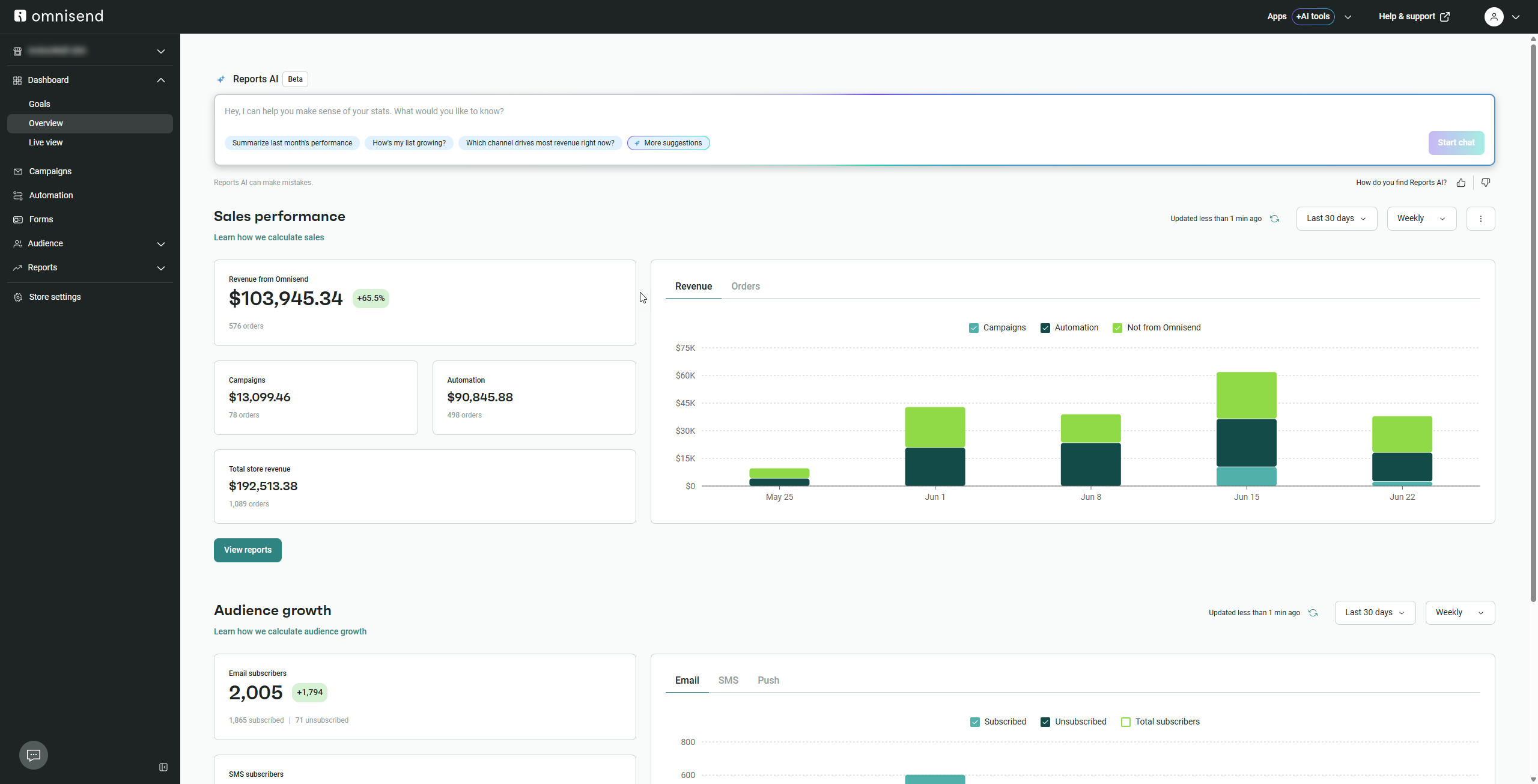
Omnisend is the second-best ecommerce ESP on this list. Native Shopify integration. Pre-built ecommerce automations (welcome, abandoned cart, browse abandonment, post-purchase). SMS and push notifications baked in.
Their segmentation is roughly 70% as deep as Klaviyo’s. For brands under 5,000 contacts, that 70% is enough. You won’t notice the missing 30% until you’re scaling past seven figures.
The pricing is the cheapest on this list at most tiers. At 500 contacts, Omnisend is $20/month vs Klaviyo’s $30. At 2,500, it’s $50 vs $70. At higher tiers the gap narrows: at 5,000 contacts, Omnisend is $88 vs Klaviyo’s $70. Klaviyo actually becomes cheaper from ~5k contacts up through ~15k.
Three honest concessions:
- The reporting is thinner than Klaviyo’s. You can’t drill into revenue per flow as granularly. For brands that obsess over attribution, this is annoying.
- Their template builder feels dated. It works, it’s just not as polished as Klaviyo’s drag-and-drop editor.
- The customer support gets stretched at higher tiers. We’ve had agency clients wait 36 hours for replies during peak season.
How it compares to Mailchimp: Better automation. Better Shopify integration. Better segmentation. Cheaper at most tiers. Better SMS.
Verdict: Omnisend is the cheapest entry into ecommerce email marketing. At 500-2,500 contacts it’s the lowest price on this list. Above 5,000 contacts, check the pricing calculator above because Klaviyo may actually be cheaper. If Omnisend fits your budget, it’s a solid platform. Just know you may outgrow it.
3. Brevo (formerly Sendinblue)
Best for: Brands with large lists, tight budgets, and basic automation needs. Especially if you email less than 4 times per month.
Starting price: Free up to 300 emails/day with unlimited contacts. Starter plan at $9/month for 5,000 email sends. Standard at $18/month.
What it does better than Mailchimp:
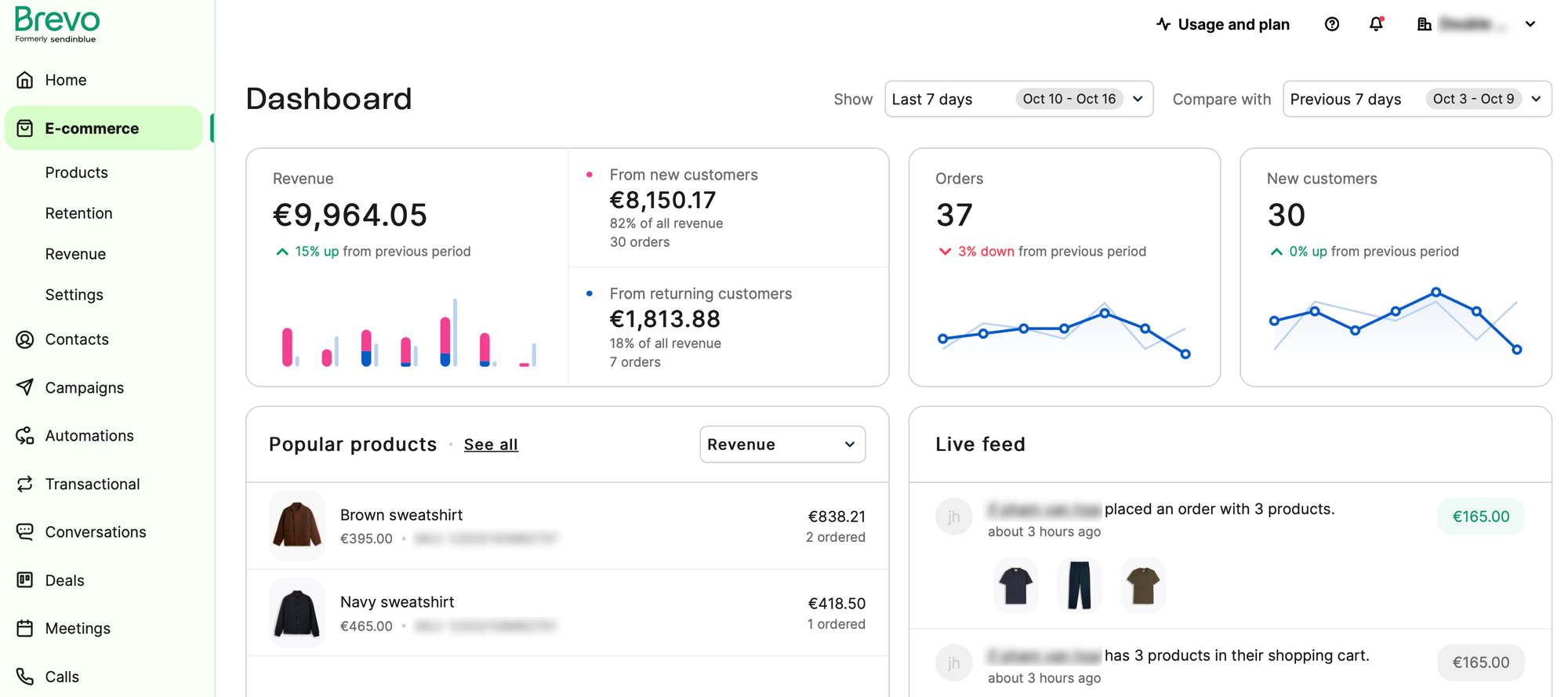
The pricing model is the win. Brevo charges by emails sent, not by contacts stored. All plans allow unlimited contacts. If you have 50,000 contacts but only email the engaged 8,000 once a week, you pay for 32,000 monthly sends, not for 50,000 contacts sitting in a database. That’s wildly cheaper than Mailchimp at scale.
Their automation builder is genuinely good now. Two years ago I would have skipped Brevo. The 2024-2025 product updates pulled them into the conversation. They’ve also added a CRM, SMS, WhatsApp, and transactional email under one platform. The Professional plan at $499/month adds WhatsApp campaigns, up to 10 users, contact scoring, and AI segmentation.
Three honest concessions:
- The Shopify integration is app-based, not native. Data syncs work fine but the lag is real. Browse abandonment fires 5-10 minutes later than Klaviyo’s.
- The deliverability is good but not great. Third-party tests consistently place Brevo below Klaviyo and Omnisend on inbox placement.
- The segmentation is shallow. You can build basic segments. Anything complex requires manual workarounds.
How it compares to Mailchimp: Way better cost model (pay for sends, not contacts). Better SMS and WhatsApp. Comparable automation. Worse segmentation depth.
Verdict: If your priority is keeping the bill under $50/month while sending to a large list, Brevo wins. Don’t use it if you need surgical segmentation.
4. ActiveCampaign
Best for: DTC brands with a service component, hybrid B2B/DTC operations, or coaching products attached to ecommerce.
Starting price: $49/month for 1,000 contacts on the Plus plan (billed annually). Lower-tier Starter plan available from $19/month.
What it does better than Mailchimp:
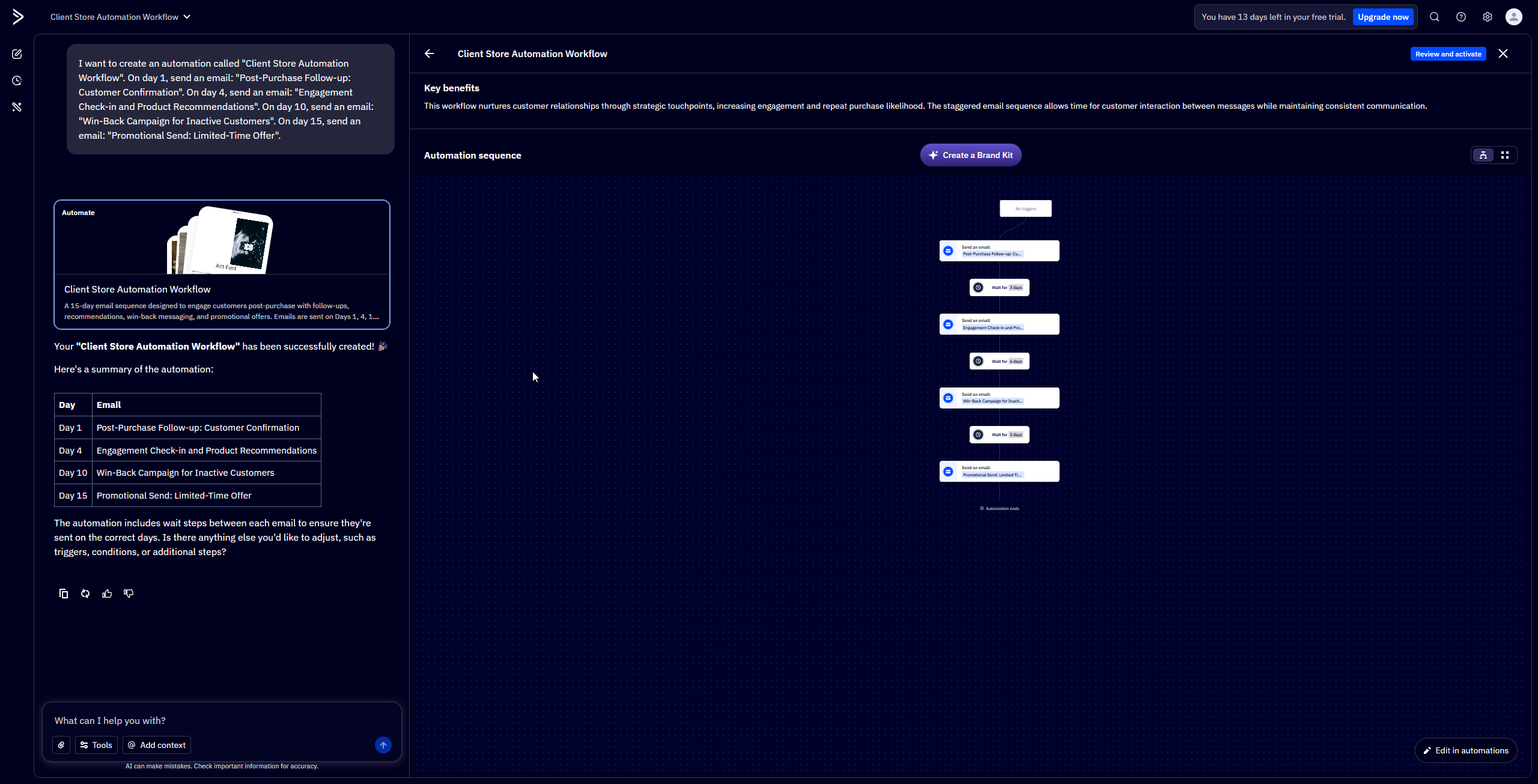
ActiveCampaign is a CRM with email marketing attached, not the other way around. If your business has a sales team, an inside-sales motion, or you sell services alongside products, this matters. You can score leads, route them to sales, and run nurture sequences from the same database.
The automation builder is the most flexible on this list. Conditional logic that would take 4 flows in Klaviyo can be done in 1 flow in ActiveCampaign.
The pricing scales surprisingly well. At 5,000 contacts, ActiveCampaign Plus costs $145/month. At 10,000, it’s $189. At 25,000, $389. Those mid-tier prices are competitive with Klaviyo at scale, though the entry point ($49 at 1k contacts) is the most expensive on this list.
Three honest concessions:
- It’s not built for Shopify. The integration exists but feels grafted on. Native ecommerce tools beat it for pure DTC.
- The interface is busy. New users get overwhelmed in week one.
- It bills for all contacts, including unsubscribed. Same ghost contacts problem as Mailchimp. You must manually clean your list or you pay for dead weight.
How it compares to Mailchimp: Way better automation. Better CRM. Worse Shopify integration. Worse for purely transactional ecommerce. Bills annually.
Verdict: Skip if you’re a pure Shopify DTC brand. Pick it if you have a sales team or sell services alongside products.
5. AWeber
Best for: Solo founders, small brands under 5,000 contacts, and anyone who wants the simplest possible setup.
Starting price: $15/month for 500 contacts. Free up to 500 contacts and 3,000 emails/month.
What it does better than Mailchimp:
AWeber has been around since 1998. The platform is stable, the deliverability is solid, and the support team actually answers. For founders who want to send a weekly newsletter, run a basic welcome series, and get on with their day, AWeber is the path of least resistance.
The pricing is honest. No surprise tiers, no contact-count games. You get all features on every plan.
Three honest concessions:
- It’s not an ecommerce ESP. No deep Shopify integration. No abandoned cart logic out of the box.
- The automation builder is basic. It works for linear sequences. Complex branching logic isn’t its strength.
- The interface looks like 2015. It works. It’s just not pretty.
How it compares to Mailchimp: Simpler. Cheaper at most tiers. Better customer support. Worse ecommerce features.
Verdict: Pick AWeber if you’re under 5,000 contacts, mostly sending newsletters, and want zero friction. Skip if you want to build complex DTC flows.
6. Kit (formerly ConvertKit)
Best for: Creator-led brands. Founders with a face. Personalities selling products.
Starting price: $15/month for 300 contacts. Free up to 10,000 contacts on the limited Free plan.
What it does better than Mailchimp:
Kit was built for creators. The visual automation builder is intuitive. The tagging system is more flexible than Mailchimp’s. The landing pages, opt-in forms, and creator-specific features (paid newsletters, product recommendations) are first-class citizens.
If your DTC brand is built around a personal brand (think: skincare line from a dermatologist, supplement brand from a fitness coach, candle brand from a designer), Kit understands your workflow in a way Klaviyo doesn’t.
Three honest concessions:
- The ecommerce features are limited. No real abandoned cart, no browse abandonment, no product feed pulls.
- It’s optimized for plain-text-style newsletters. Highly designed HTML emails are a pain to build.
- It’s not the cheapest option. Brevo and AWeber beat it on price at most list sizes.
How it compares to Mailchimp: Better for creators and personality-driven brands. Worse for pure transactional ecommerce. Comparable price.
Verdict: If your brand is built around you (or another person), Kit fits like a glove. If your brand is a product catalog without a face, pick Klaviyo or Omnisend.
When to Actually Stay on Mailchimp
I’ve talked you out of Mailchimp for most of this post. Here’s when the migration isn’t worth the work:
- Your list is under 500 contacts. The free tier covers you. Migrating costs more time than it saves money.
- You send purely transactional emails. Order confirmations, shipping updates, password resets. Mailchimp’s Transactional product (formerly Mandrill) works fine.
- You run a non-ecommerce business that just needs newsletters. A nonprofit, a community, a podcast. Mailchimp’s templates and ease of use are real advantages here.
- You’re inside a 90-day product launch. Don’t migrate ESPs during a launch window. Wait until you’re on the other side.
For everyone else, especially DTC brands, the migration pays back inside two months. Usually faster.
Final Verdict
For DTC brands: start with Klaviyo. It’s cheaper than Mailchimp up to ~15,000 contacts, and it’s the only platform with native Shopify revenue attribution, predictive analytics, and behavioral flows built for ecommerce. There is no revenue threshold. The pricing data doesn’t support one. We’ve migrated 25 brands onto Klaviyo without a single rollback.
If you’re watching every dollar and don’t need Klaviyo’s advanced features yet, Omnisend is the next-best ecommerce pick. Cheapest entry point, solid Shopify integration, 80% of Klaviyo’s capability.
If your priority is cost and you can live with shallower segmentation, Brevo is the budget winner. Pay for sends, not contacts.
If you have a sales team or service component, ActiveCampaign earns its place.
If you’re a small operator or a creator-led brand, AWeber or Kit keep you simple.
Don’t stay on Mailchimp out of inertia. The migration takes 14-21 days for most brands. The revenue lift pays for itself before the next quarter.
Want us to handle the Klaviyo migration? Talk to AskTimmy →
FAQ
Is Klaviyo really worth it vs Mailchimp?
For ecommerce brands, yes. And it’s not just about features anymore. Klaviyo is actually cheaper than Mailchimp at every tier up to ~15,000 contacts. At 5,000 active profiles, Klaviyo costs $70/month vs Mailchimp Standard at $135. That’s 48% cheaper. The average client we’ve migrated sees a 30-60% lift in email revenue within 90 days. Above 15,000 contacts, Klaviyo costs more on sticker price, but it only charges for active profiles. Mailchimp charges for everyone, including unsubscribed contacts. Factor in a typical 20% dead weight and the real-world gap is much smaller than the pricing pages suggest.
Does Mailchimp charge for unsubscribed contacts?
Yes. Mailchimp counts subscribed, unsubscribed, and non-subscribed contacts toward your billing tier. You must manually archive contacts to stop paying for them. Klaviyo, Omnisend, and Kit only charge for active profiles: contacts who can actually receive messages. This is the single biggest hidden cost of Mailchimp for DTC brands with growing lists.
Can I migrate from Mailchimp to Klaviyo without losing my list?
Yes. The migration involves exporting your contacts with engagement data, importing into Klaviyo, recreating your flows and segments, and gradually warming the new sender domain. Done correctly, you lose zero subscribers and zero deliverability. Done sloppily, you can land in spam for weeks.
How long does a Mailchimp to Klaviyo migration take?
Most brands we’ve migrated take 14-21 days end to end. That includes setup, flow recreation, segment building, deliverability warming, and testing. A complex brand with 20+ existing flows can take 30 days.
What’s the best free Mailchimp alternative?
Brevo gives you the most generous free tier (unlimited contacts, 300 emails/day). Omnisend’s free tier (250 contacts, 500 emails/month) is more ecommerce-focused. Klaviyo’s free tier covers 250 active profiles and 500 emails/month.
Does Omnisend integrate with Shopify as well as Klaviyo?
Almost. Omnisend’s integration is native and reliable. The data depth is roughly 80% of what Klaviyo offers. For brands under 5,000 contacts, you won’t notice the gap.
Is Brevo better than Mailchimp for ecommerce?
For cost-conscious senders with simple needs, yes. Brevo charges by email volume, not contacts, which is a fundamentally better model for DTC brands with growing lists. For brands that want real ecommerce automation and segmentation, Klaviyo or Omnisend are stronger picks.
Why is everyone switching from Mailchimp?
Four reasons: ghost contact billing (paying for unsubscribed contacts), shallow segmentation for ecommerce, the loss of native Shopify integration, and higher pricing than Klaviyo at the tiers where most DTC brands sit. The category moved on. Mailchimp didn’t move with it.
Can I use Klaviyo without an agency?
Yes, plenty of brands run Klaviyo themselves. The learning curve is real but the documentation is good. Most brands hit a ceiling around month 3-4 where they need either a senior in-house hire or a Partner agency to unlock the next level of revenue.
About the Author
I’m Timmy, founder of AskTimmy. We’re a Klaviyo Partner agency based in Pakistan, serving DTC and Shopify brands across the US, UK, and EU. We’ve migrated 25 brands off Mailchimp and built email and SMS programs that generate $33.5M+ in annual revenue across our client portfolio.
If you’re considering a move off Mailchimp and want a second opinion before pulling the trigger, book a 30-minute migration audit. Free, no pitch, just an honest read on whether your brand is ready.